
Product Technology & Knowledge
XinNeng High Voltage Electric: Here, you can learn about the selection, technical issues, and quality analysis of lightning arresters, composite insulators, and Expulsion Fuse cutout.
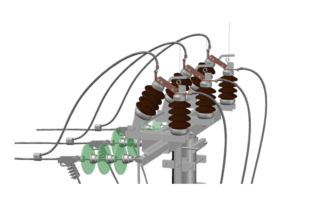
Outdoor MV Disconnector GW4-40.5/1250-31.5: Type Tests and Ratings Explained
For a distribution or sub-transmission substation, the disconnector is the device that gives a physical, visible open point — the safety boundary line crews trust before they touch a circuit. The GW4-40.5/1250-31.5 is XinNeng's outdoor, centre-rotating double-break isolator for 40.5 kV networks. This article lists exactly what its Shenyang type-test report (No. 085146) verified, so you can specify and accept it against the certificate rather than the brochure.
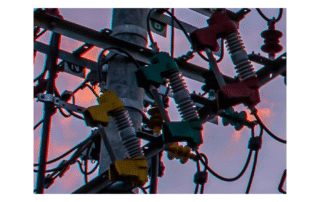
Expulsion Drop-out Fuse Cutout: How It Works, Type Tests and Selection (11 kV / 200 A)
The expulsion drop-out fuse cutout is the workhorse of overhead distribution protection: cheap, self-indicating and easy to re-fuse by hand. It protects distribution transformers and laterals from fault currents and provides a visible open point for safety. This article explains how it works, what its type test must prove, and how to specify one — with a clear note on which XinNeng-specific figures still need confirmation from the source certificate.
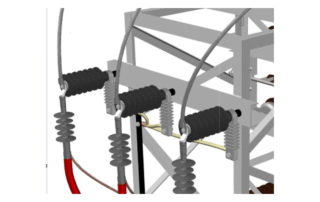
Metal-Oxide Surge Arrester Type Tests & Ratings: KEMA 3-36 kV and GB/T 11032 Reports Explained
A metal-oxide surge arrester is the component that stops a lightning strike or switching surge from destroying a transformer, breaker or cable. It is deceptively simple — a stack of zinc-oxide discs in a polymer housing — but the difference between a 5-year and a 25-year service life is entirely in the type-test evidence. This article explains what an arrester type test proves and lists the as-tested ratings XinNeng holds, from distribution-class 3-36 kV through 220 kV station class.
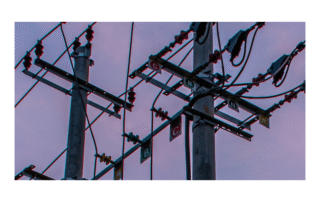
Composite Insulator Type Tests & Verified Ratings: FXBW 10-110 kV (XIHARI Reports)
When a utility or EPC engineer specifies a composite insulator, the single most important document behind the procurement is the type-test report. It is the independent proof that the insulator will survive its mechanical load, withstand the system overvoltages, and keep its pollution performance for 25-30 years. This article walks through what XinNeng's XIHARI type-test reports actually verify, and lists the as-tested ratings for the FXBW suspension-insulator family from 10 kV to 110 kV.
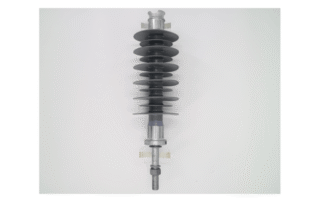
Polymer Insulator Selection Guide: Specifications, Ratings, and Field Application
Polymer-housed composite insulators have replaced porcelain in most new overhead transmission and distribution lines. Their lighter weight, hydrophobic surface and resistance to vandalism reduce both installation cost and in-service risk. Understanding how a silicone rubber composite insulator is built — and what each layer contributes — is the first step to specifying it correctly.
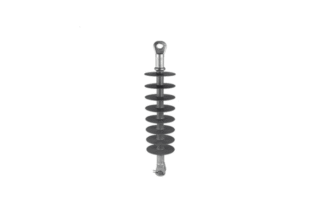
Polymer Insulator Technology & Design: How Silicone Rubber Composite Insulators Work
Selecting a polymer composite insulator for a new line, a re-conductoring project, or a sub-station is not difficult, but it is easy to get wrong if you specify by voltage alone. The right choice depends on five independent parameters — voltage class, mechanical load, creepage distance, end fittings, and any special pollution or altitude conditions. This guide walks through each one, then gives you the standard XinNeng ratings tables so you can pick a catalogue part number in minutes.